Bonsai Export and Packing Best Practices and Procedures
Order online for trees in our current collection under 1 million yen, or contact us.
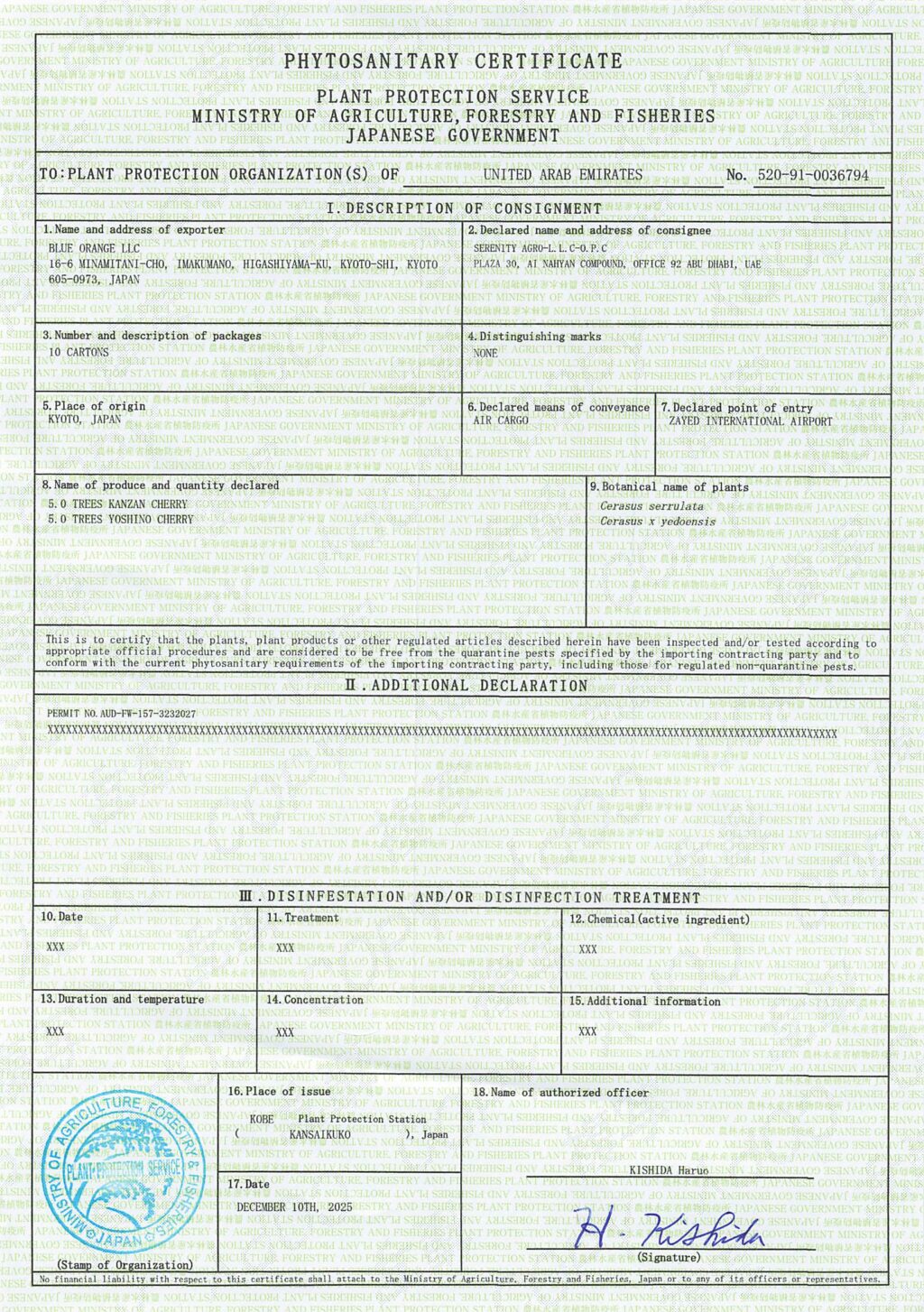
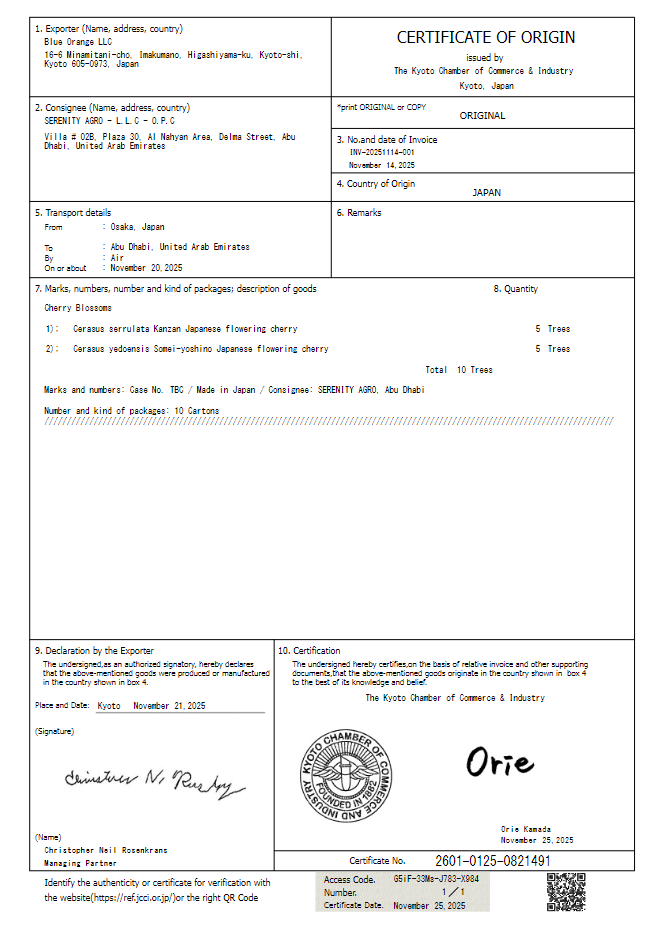
The shipping we typically use from Japan is going to generally be DSV again unless we change the shipping company for suitability for the arrival procedures in the client country later before departure. We will work through getting all appointed and labeled by box and for having excellent organization on the AWB and mobilization to their host locations. Then as the time gets closer, before shipping we will double check all the outgoing documents with your team for smooth arrival, We would absolutely love to please see some photographs and videos later of the home and posture of the trees, once set up!
The Best Bonsai are Very Expensive.
Far and away the most beautiful and impressive bonsai from masters are truly truly expensive. In real bonsai, as we can explain and you will see the price changes depending on age, shaping, and how “finished” the tree is before that. With these trees, if cheaply or if any are found discounted in Japan it can usually lead to disappointment and depreciates the beauty and perceived class of its host space, rather than boosts it. Also 1 or 2 master we send to clients and the premises can and will gladly regularly visit the more high end trees to check up on these trees and service them for their own craft. It is very serious.
The top people for bonsai are really keen on their reputation and integrity, so enact and train the trees of that tier only and are shy to ever diminish the craft or cost or years, and the shipping is reasonable in balance but delicate and sensitive too in order to convey them in care. Of course, with smaller plumage (tree branch “reach” counted in total height) we can reduce the size and thus the price of the trees, so that the total “reach” (the actual height of trunk branch and foliage) totals 60cm as you prescribe and proscribe. That will make the cost significantly less.
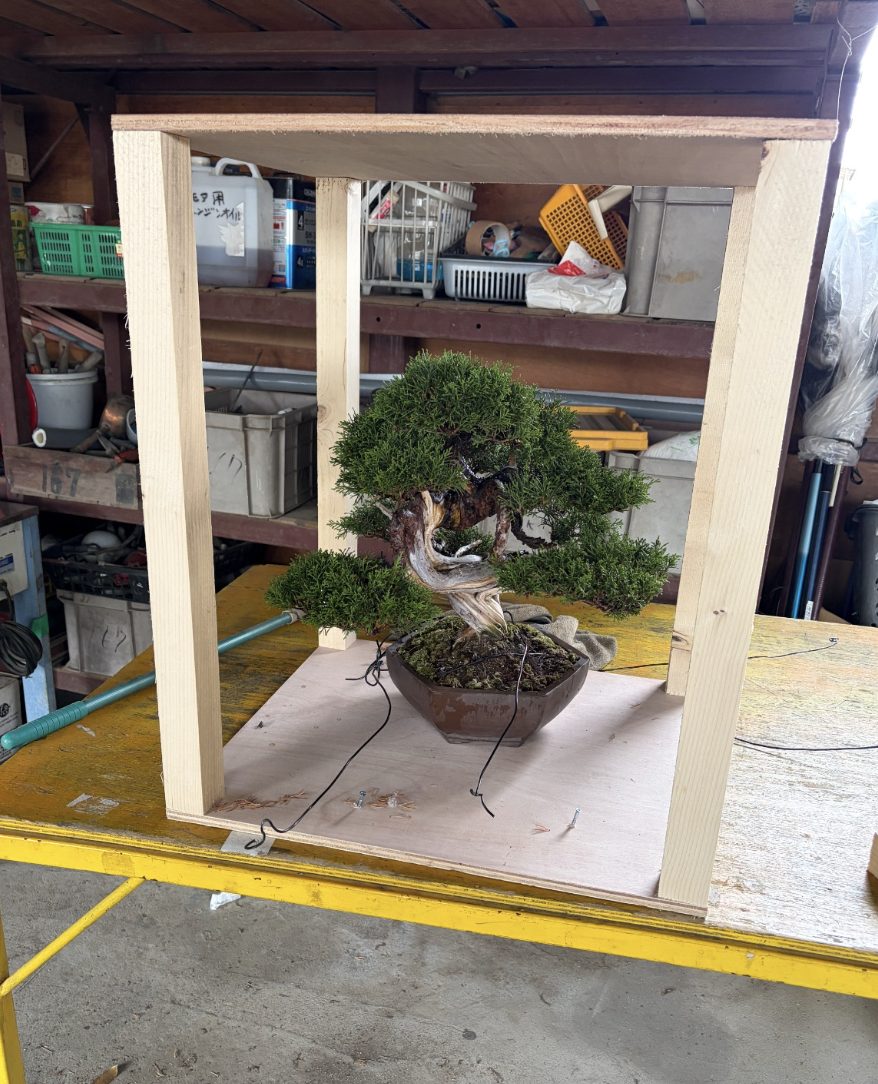
All bonsai and branches generously hedge the height and use oversize pack, and maybe we will at movement time rigidify the walls of the boxes, so as to shell and be gentle on the branches and “plumage,” or foliage in other words of translation, of these 54 trained bonsai.
This example picture below is not complete packing, as it will have side panels with some space for trees to breathe. Then wrapped with plastic. Of course our bonsai will be attached onto the panel below so that it does not move around inside. The wood packing will be made just for the bonsai to fit the size. It will be an excellent moving regime.
Japanese Made Older and Larger Bonsai Tree for Export Price Tiers and Differences
Option A
USD 4,900 per tree
- – Well-balanced, healthy trees
- – Simpler form and younger visual impression. Not as striking visually nor as complex and gnarled
- – Suitable for projects prioritizing scale and efficiency, but better than anything in UAE or USA market.
Option B
USD 5,900 per tree
- – Strong overall presence and balance
- – More developed structure and age impression, showing age complexity and emulation of larger trees like an optical illusion.
- – Best balance of quality, consistency, and value
Option C
USD 6,900 per tree
- – Premium-grade selection
- – Trees with stronger individuality and refinement, unique and striking character that adds high prestige to a room and setting.
- – Ideal for clients seeking higher visual impact
Option D Premium / Flagship Option (This is what we offer including consultation and concierge to clients serious about top trees):
USD 8,850 per tree and up
- – Fully premium, showcase-level bonsai, which would command competitive bidding in and esteem in high level community in Japan, and be museum worthy or key showpiece tier.
- – Distinct character, age, and form
- – Suitable for individual statement pieces or special placements
Once you make decisions on this, and choose a tree by photo or visit, we will send you the invoice for our Japanese bank, and get ready for the shipment!
Looking forward to hearing from you soon!
*These figures are provided as estimates to support your initial budgeting and selection brackets. As each bonsai is a living tree, final pricing will be confirmed after detailed selection, reflecting a tuned synthesis and sum of the individual characteristics such as age, form, balance, and condition of each bonsai.
Sakura and Cherry Blossom Bonsai Tree Flowering and Seasonal Handling
Based on generally accepted horticultural knowledge and information commonly shared by growers and researchers (rather than our own direct experience in your specific microclimate of course, which is impossible to predict or prepare for to a 100% level of confidence), cherry blossom trees are understood to require a certain accumulation of “chill hours” in order to reliably trigger flowering.
In most references, chill hours are defined as the cumulative time during dormancy when temperatures remain approximately within the range of 0–7°C. The specific number of hours required varies by cultivar and by calculation method, and figures such as 600–900 hours for Somei Yoshino and 700–1,000 hours for Kwanzan are commonly cited in the literature.
When these chill requirements are not met, it is generally understood that the trees can remain alive and continue vegetative growth, but flowering may be significantly reduced, irregular, or may not occur in a given season. Insufficient chill is not typically considered fatal to the tree itself, although it can affect flowering performance.
Plant growth is influenced by the interaction of multiple environmental factors. For this reason, it is not generally possible to conclude that several consecutive years of insufficient chill alone would necessarily lead to a progressive decline in tree health. In outdoor conditions such as those in tropic latitudes or deserts, high temperatures and arid conditions are often considered a more significant environmental concern for long-term tree performance than insufficient chill alone.
In climates where winter temperatures rarely fall within the chill range for extended periods, consistent and predictable flowering should therefore not be assumed without controlled environmental intervention.
We hope this information is helpful for your briefing materials, noting that local conditions, management practices, and year-to-year climate variation can all influence actual outcomes.
Bonsai outdoor needles drying indoors – troubleshooting FAQ #1
If bonsai is drying out and is an outdoor bonsai you have indoors, usually the bonsai either did not get enough water, or too much water.
You better keep it outside and again to get sunshine and breeze, water them until the water leaks from the bottom only when the soil is dry, and do nothing else, just be patient.
If it revives, new buds will come out in spring (April to June in the northern hemisphere.)